Learn how common marine air conditioning problems develop and when professional boat AC repair can restore reliable cooling onboard.
Air conditioning can make a boat much more comfortable during hot weather, especially when owners spend long hours or several days onboard. However, marine AC systems operate in a demanding environment where saltwater, humidity, vibration, and regular use can affect performance. Boat Work Times helps boat owners with different marine repair needs, including professional boat AC repair when cooling systems begin to develop problems.
Table of Contents
Why Marine Air Conditioning Needs Attention
A marine air conditioning system depends on several components working together. Depending on the installation, these can include a compressor, evaporator, condenser, blower, seawater pump, strainer, hoses, electrical controls, and drain lines.
A problem with one component can affect the performance of the entire system. For example, restricted seawater flow can reduce cooling efficiency, while a dirty filter can limit airflow even when the main cooling components are functioning correctly.
Regular inspections can help identify these issues before they result in a complete system failure.
Weak Cooling Can Have Several Causes
One of the most common problems is an air conditioner that runs but does not cool the cabin effectively.
Possible causes include:
- Dirty air filters
- Restricted airflow
- Blocked seawater intake
- Problems with the seawater pump
- Dirty coils
- Electrical faults
- Compressor problems
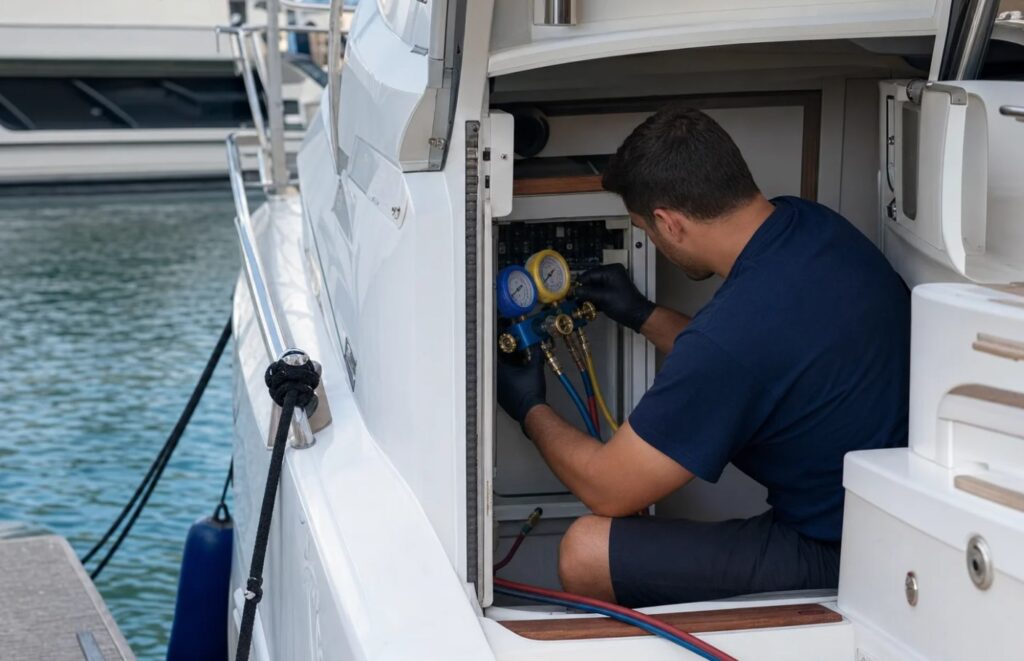
Because these symptoms can have different causes, replacing parts without proper diagnosis may not solve the problem. Professional boat AC repair can help determine whether the issue involves airflow, water circulation, electrical components, or the cooling system itself.
Seawater Flow Is Essential
Many marine air conditioning systems use seawater to remove heat from the system. This makes the seawater intake, strainer, pump, and related hoses important parts of regular maintenance.
Marine growth or debris can restrict the intake and reduce water circulation. A dirty strainer can create similar symptoms, while a worn pump may not provide sufficient flow.
Boat owners should periodically inspect the strainer and visible connections for debris, leaks, or damage. If the system begins shutting down or cooling becomes inconsistent, seawater circulation should be included in the diagnostic process.
Electrical Problems Can Affect AC Performance
Marine air conditioners also depend on a reliable electrical supply. Corroded terminals, loose connections, damaged wiring, faulty breakers, and voltage problems can prevent the system from operating normally.
A system that suddenly stops starting may have an electrical issue rather than a cooling failure. Repeated breaker trips should receive particular attention because the breaker may be responding to an underlying electrical problem.
Resetting the breaker repeatedly without identifying the cause is not a good solution. Electrical components should be inspected and tested to determine why the system is drawing excessive current or losing power. Professional boat AC repair can help diagnose these electrical faults and restore reliable system operation.
Strange Noises Should Not Be Ignored
Changes in sound can provide an early warning that something is wrong.
Boat owners may notice:
- Rattling
- Grinding
- Clicking
- Humming
- Excessive vibration
- Unusual pump noises
Some sounds may come from loose components or fan problems, while others can indicate mechanical wear. Because marine equipment is exposed to constant vibration, small mechanical issues can become more serious if they are ignored.
Early boat AC repair may help address the underlying problem before it affects additional components.
Water Around the System Can Indicate a Drain Problem
Condensation is normal during air conditioning operation, but it should drain through the appropriate system.
Water collecting around the air handler or inside the cabin can indicate a clogged drain line, damaged hose, or another drainage problem. Seawater leaks can also develop around hoses and fittings.
Persistent moisture can damage nearby cabinetry, flooring, insulation, and other materials. It may also contribute to unpleasant odors and mold growth. When these problems appear, professional boat AC repair can help identify the source of the leak and restore proper drainage.
For this reason, water appearing around an AC unit should be investigated rather than treated as normal condensation.
Airflow Problems Can Reduce Cabin Comfort
Sometimes an AC unit produces cold air but the cabin still does not feel comfortable. In these situations, the problem may involve airflow rather than the cooling system.
Dirty filters, blocked vents, damaged ducting, or blower problems can restrict the amount of conditioned air reaching the cabin.
Keeping filters clean and making sure vents are unobstructed can help maintain proper airflow. If these basic checks do not resolve the problem, professional boat AC repair can help determine whether the restriction is inside the blower, ducting, or another part of the system.
Seasonal Maintenance Helps Prevent Failures
Air conditioning systems should be checked before periods of heavy use. A basic seasonal inspection can include:
- Cleaning or replacing filters
- Checking the seawater strainer
- Inspecting hoses and clamps
- Testing the seawater pump
- Checking electrical connections
- Inspecting drain lines
- Checking airflow
- Looking for corrosion or leaks
These checks can reveal developing problems before they become inconvenient during a trip.
When Professional Service Is Needed
Some maintenance tasks are simple, but more complicated problems may require professional diagnosis.
Professional boat AC repair may be appropriate when the system:
- Will not start
- Provides very little cooling
- Shuts down unexpectedly
- Has repeated electrical problems
- Produces unusual noises
- Develops water leaks
- Has poor seawater circulation
A complete inspection can help identify the actual cause instead of replacing individual components based only on symptoms.
Final Thoughts
A reliable marine air conditioning system depends on proper airflow, seawater circulation, electrical power, drainage, and mechanical operation. Changes in cooling performance, unusual sounds, water leaks, and repeated shutdowns should not be ignored.
Regular maintenance can help identify problems early, while timely boat AC repair can address more complicated issues before they lead to larger failures. Keeping the system properly serviced can help boat owners maintain a more comfortable and reliable cabin throughout the boating season.
For more useful articles about boat repairs, air conditioning, electrical systems, engines, plumbing, fiberglass, maintenance, and other marine services, you can find them here.